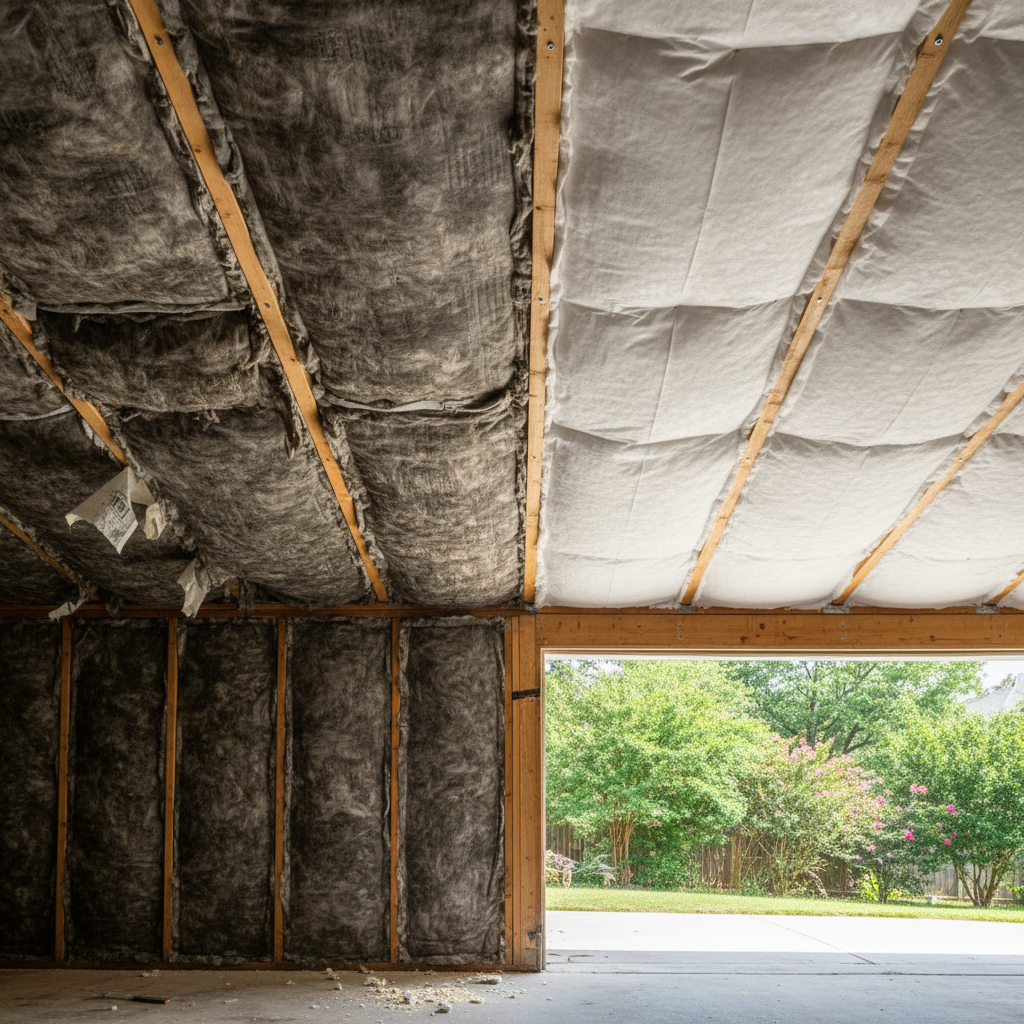
Your garage in Leander turns into an oven by two in the afternoon. If you park your car in there or use it as a workspace, you already know the brutal reality of Central Texas summers. Garages in areas off Hero Way experience temperatures where tools and surfaces become very hot. Insulating the garage makes a massive difference, but choosing the right material matters. Homeowners are usually looking at two main contenders: traditional fiberglass batts or spray foam insulation.
The Case for Fiberglass Batts
Fiberglass batts are what most people think of when they picture insulation. They come in rolls or pre-cut batts that fit right between your wall studs and ceiling joists. The biggest selling point for Fiberglass Batts is upfront cost. If you are on a strict budget, batts are inexpensive and you can install them yourself in an afternoon.
However, fiberglass batts have a hard time in our local climate. Leander sits on heavy expansive clay soil that shifts with our dry summers and sudden downpours, and garages tend to move a bit too. Over time, fiberglass batts sag, droop, and lose their R-value. Fiberglass batts also do not stop air infiltration. If air is leaking into your garage, batts will not do much to slow it down. Mice and rodents also like nesting in fiberglass batts, especially when they are looking for a break from the winter chill.
Why Spray Foam Changes the Game
Spray Foam insulation is a totally different material. Whether you choose open-cell or closed-cell, spray foam expands to fill every nook, cranny, and gap in your garage walls and ceiling. Spray Foam creates a monolithic thermal barrier that stops outside air from entering the space.
When we work on homes in neighborhoods like Larkspur or Bryson, we see how badly garages suffer from radiant heat beating down on the roof deck. Spray Foam tackles that heat directly. Spray Foam adheres directly to the framing, meaning it will not sag, settle, or fall down over time. Spray Foam also adds structural rigidity to your walls and keeps out dust, humidity, and pests.
The downside to Spray Foam is the cost. Spray Foam is significantly more expensive upfront than fiberglass. You cannot really install Spray Foam yourself as a do-it-yourself project. You need professional equipment and trained technicians who know how to mix and apply the chemicals so the material cures right.
Comparing Cost, Durability, and Maintenance
Let us look at numbers and real-world performance for Insulation in Leander.
- Cost: Fiberglass Batts win on day one. Spray Foam insulation costs three to four times more initially.
- Durability: Spray Foam insulation lasts for the life of the building without maintenance. Fiberglass batts need replacing or adjusting every decade or so, especially if they get damp.
- Appearance: Spray Foam looks clean and sealed once trimmed out. Fiberglass batts look messy unless you cover them with drywall or paneling, which you should do anyway since exposed fiberglass is difficult to touch.
Horizon Insulation Solutions provides Insulation services for homes in Leander, Texas.
My Honest Recommendation for Leander Homes
If you are planning to use your garage as a home gym, workshop, or just want to keep the adjacent rooms in your house from cooking, skip the fiberglass. At Horizon Insulation Solutions, we generally tell homeowners that Spray Foam insulation is worth the investment in a garage setting, particularly if you have a bedroom situated directly above it. The air sealing capability of Spray Foam keeps the extreme heat out much better than batts ever could. If you just want basic temperature mitigation on a strict budget and plan to seal the walls up with drywall immediately, fiberglass batts will do an adequate job—just do not expect miracles when July rolls around.
For homes and businesses in Leander, Horizon Insulation Solutions provides expert Insulation services.