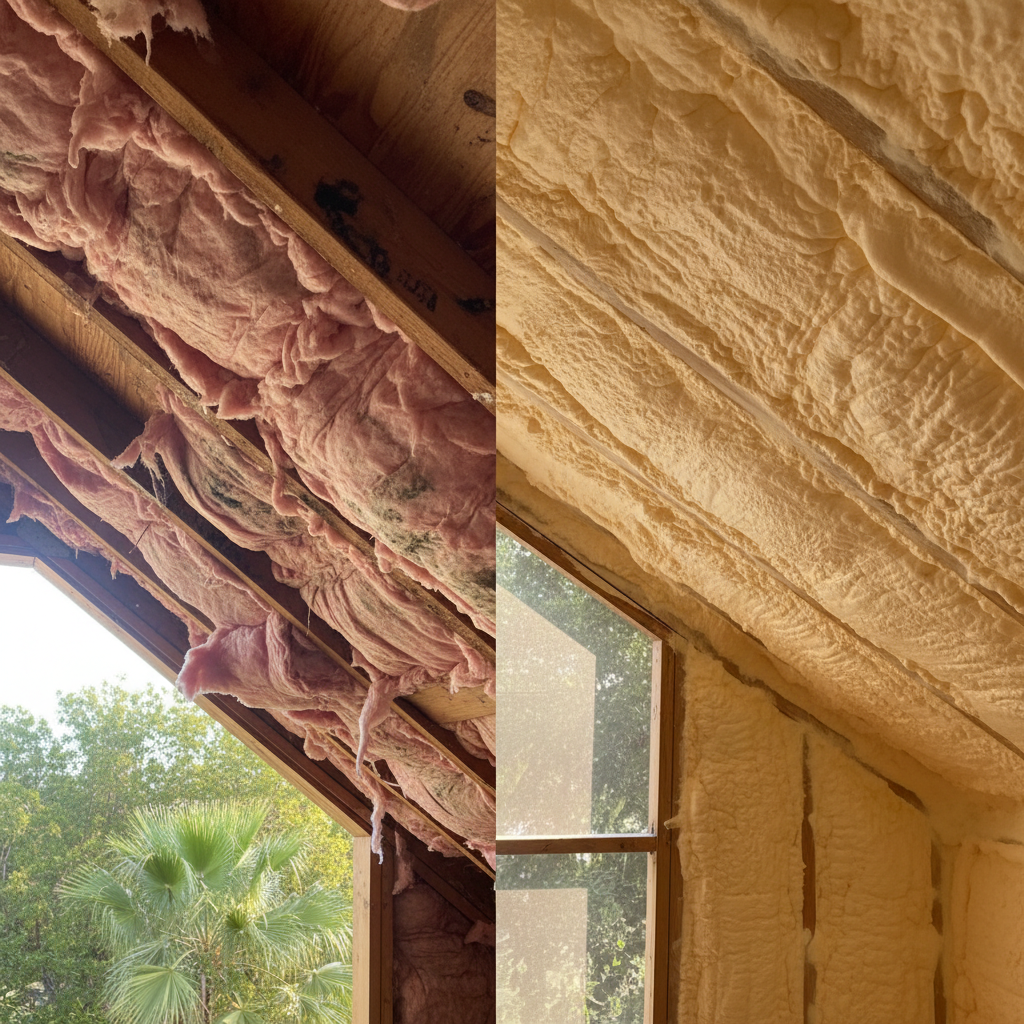
Alright, let's talk spray foam. Specifically, closed-cell. It's a great product, no doubt, especially for keeping our Leander homes comfortable and energy-efficient. But when you start looking into it, you'll hear about two main ways folks apply it: a thin flash coat, usually around half an inch, or a full-depth application that fills the entire cavity. So, which one's right for your house?
What's the Deal with Closed-Cell?
First off, why closed-cell at all? Well, it's dense. It creates a really strong air seal, which is crucial here in Central Texas with our wild temperature swings and high humidity. It also adds structural rigidity, and it's a vapor barrier. That last part is a big deal for keeping moisture out of your walls and attic, preventing mold and rot, especially if you're building a new home or doing a major remodel.
Option 1: The Half-Inch Flash Coat
This is where you spray just enough closed-cell foam – usually half an inch to an inch – directly onto the sheathing or block wall. It creates that critical air and vapor barrier. Then, on top of that, you add traditional insulation like fiberglass batts or blown-in cellulose to get your full R-value. Think of it as a super-sealed shell with conventional insulation filling the rest.
- Cost: Generally, this is the cheaper route upfront. You're using less of the expensive closed-cell foam, and then you're topping it off with more affordable insulation. It's a good way to get some of the benefits of closed-cell without the full price tag.
- Durability: The closed-cell layer itself is incredibly durable. It won't sag, settle, or lose its R-value over time. The fiberglass or cellulose on top will perform as expected, which is generally good, but not as tough as full-depth foam.
- Maintenance: Pretty much zero for the foam layer. If you ever need to access wiring or plumbing, you'll still have to deal with the batts or cellulose, which is easier than cutting out full-depth foam.
- Appearance: You won't see it once the drywall is up, but during installation, it's a thin, rigid layer.
Option 2: Full-Depth Closed-Cell Spray Foam
This is exactly what it sounds like. We fill the entire wall or ceiling cavity with closed-cell spray foam. If you've got a 2x4 wall, that's 3.5 inches of foam. A 2x6 wall? 5.5 inches. This gives you maximum R-value and all the benefits of closed-cell, from floor to ceiling, wall to wall.
- Cost: This is definitely more expensive per square foot. You're using a lot more of that premium material. There's no getting around that. However, the long-term energy savings can be substantial, often making up for the initial cost over the life of your home.
- Durability: Unmatched. This stuff isn't going anywhere. It's rigid, impervious to moisture, and creates an incredibly strong, monolithic barrier. It's essentially a permanent part of your home's structure. It's not going to be affected by pests or water damage the way other insulations might.
- Maintenance: Like the flash coat, it requires no maintenance. The downside, if you can call it that, is if you ever need to run new wires or pipes through an existing wall, it's a much bigger job to cut through and repair the foam.
- Appearance: Again, it's hidden. But during installation, it's a thick, uniform layer that completely fills the cavity.
My Take for Leander Homes
Here's the deal: for most homes in Leander, especially with our hot, humid summers and occasional freezes, I almost always recommend the full-depth closed-cell spray foam for attics and exterior walls if your budget allows it.
Why? Because of the air sealing and the vapor barrier. Our climate is tough on homes. We get those scorching August days where the attic can hit 150 degrees, and then you've got the humidity trying to push its way into your conditioned space. Full-depth closed-cell handles all of that beautifully. It creates an incredibly tight envelope that significantly reduces heat gain and moisture intrusion.
Think about it: a lot of homes around here, especially in older neighborhoods like those near Old Town Street, might have some air leakage issues. Full-depth foam tackles that head-on. It's not just about the R-value; it's about the complete air and moisture control. You'll feel the difference in comfort, and you'll see it in your energy bills.
Now, if the budget is super tight, a half-inch flash coat with traditional insulation is still a huge upgrade over just batts alone. You're still getting that critical air and vapor barrier. It's a solid compromise, and I've helped plenty of folks get great results with that approach. But if you want the absolute best performance and long-term comfort, especially with the energy demands we have here in Texas, go full-depth.
At Horizon Insulation Solutions, we've seen firsthand what a difference the right insulation makes. It's an investment, sure, but it pays dividends in comfort and savings for years to come. Don't just think about the upfront cost; think about how much you'll appreciate a consistently comfortable home and lower utility bills every single month.